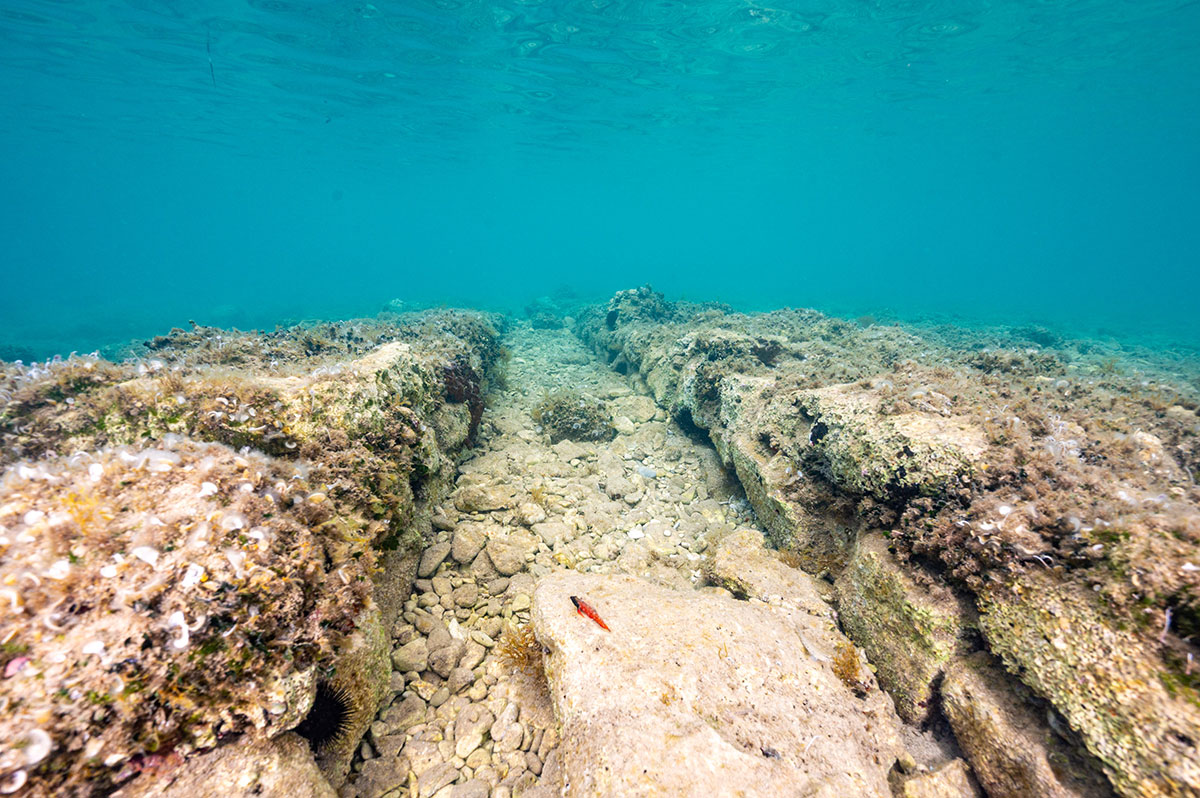
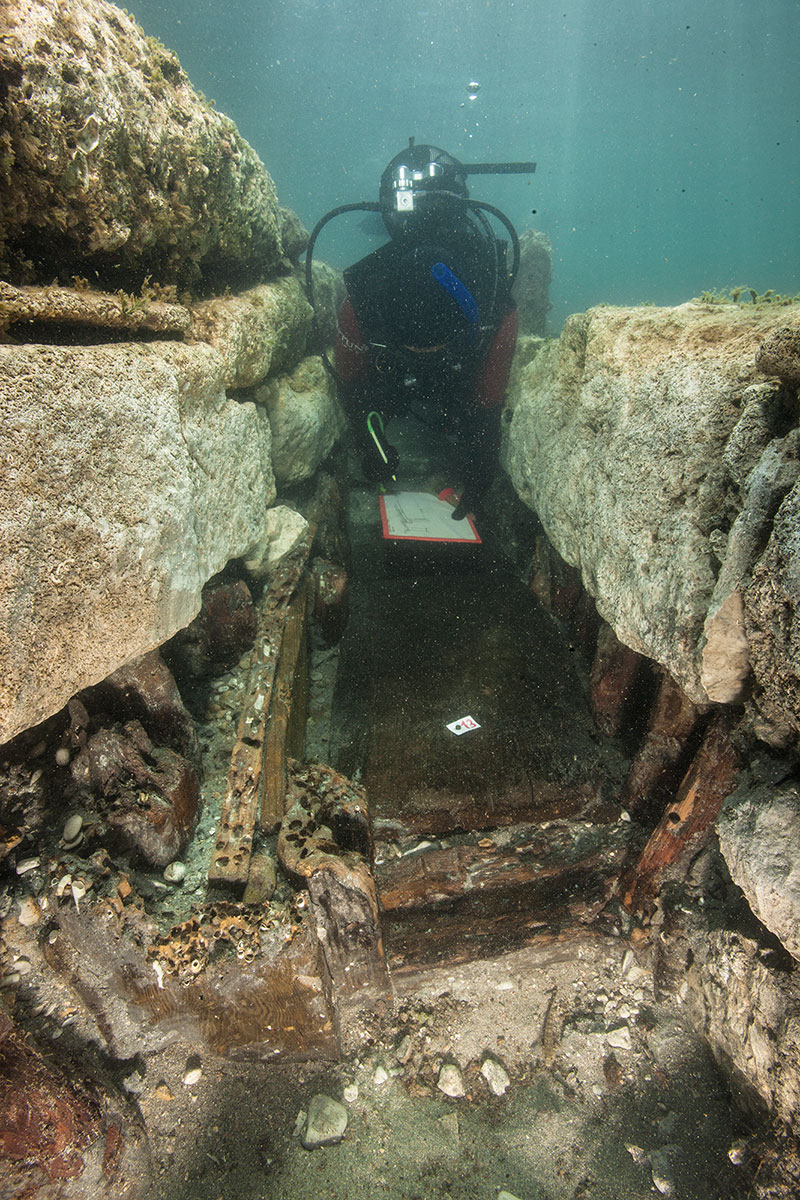
The channel extended from the former seashore towards the salt pans over a distance of 48 metres. At the very end of the channel there was a larger stone sluice structure fitted with a wooden gate used to regulate the inflow of seawater into the evaporation and crystallisation pans. Along the entire length of the channel, archaeologists have so far identified five similar sluice structures with a one-metre elevation difference, allowing strict control of sea levels within the salt pans isolated from direct tidal influences and hydrometeorological conditions.
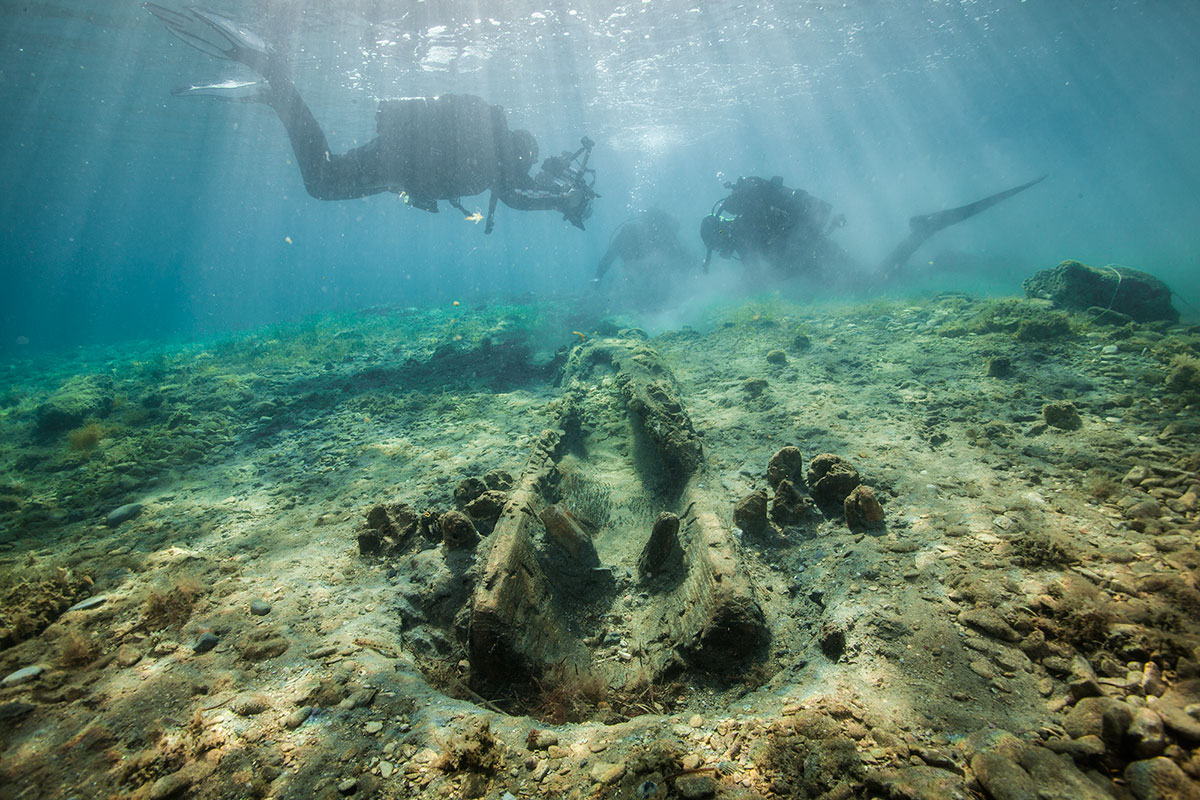
Archaeological investigations conducted within and around the channel uncovered various wooden elements belonging to the saltworks production facility. The finds include oak pipes, some preserved in lengths exceeding five metres, wooden floors, sluice structures, gates, chests, and wooden piles used as foundations for the walls. These wooden remains survived due to the anoxic sediment (oxygen-free mud) in which the saltworks had been built.
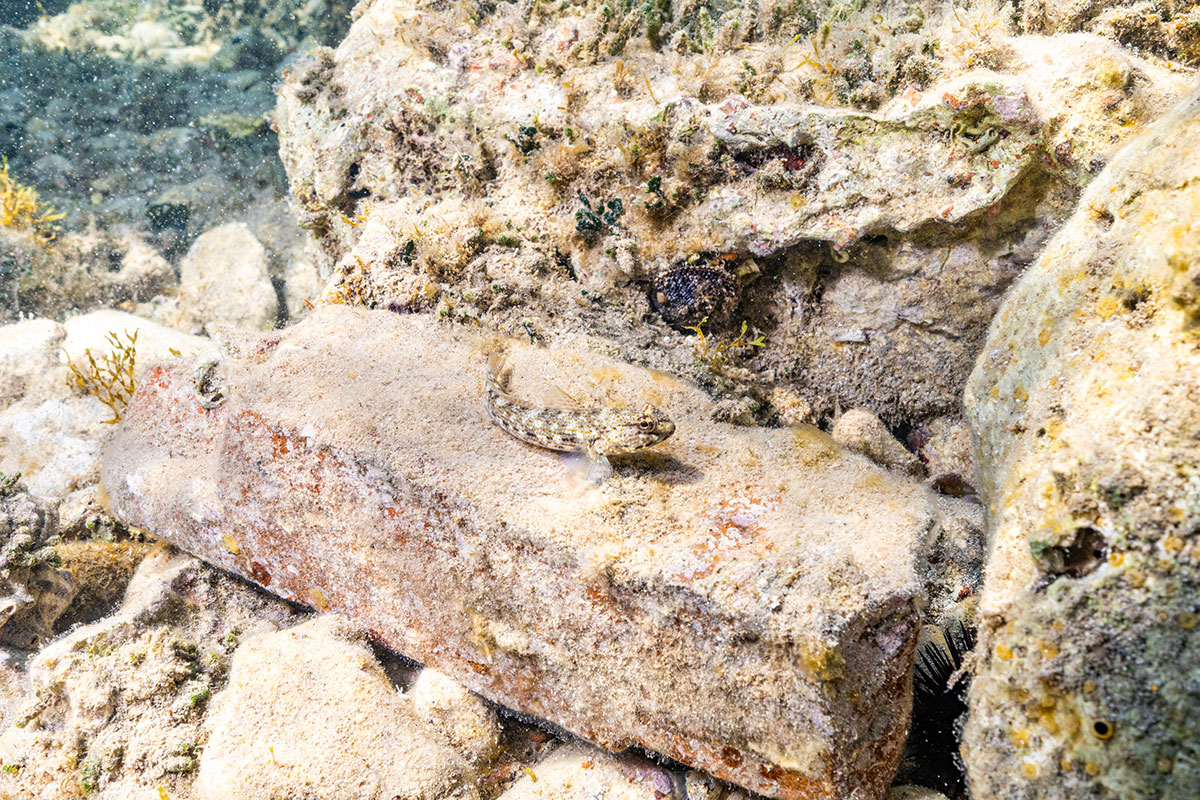
On the western side of the bay, the remains of two additional stone-built channels associated with the saltworks are also visible, together with stone sluice elements fitted with gates. In the better-preserved channel, over a length exceeding 11 metres and a width of approximately 1.5 metres, two sluice structures used for regulating the flow of seawater have been found. One of them was made as a monolithic stone element with two square grooves connected by a channel.